
Why Most Clinic Software Doesn't Work for Acupuncture Clinics in New Zealand
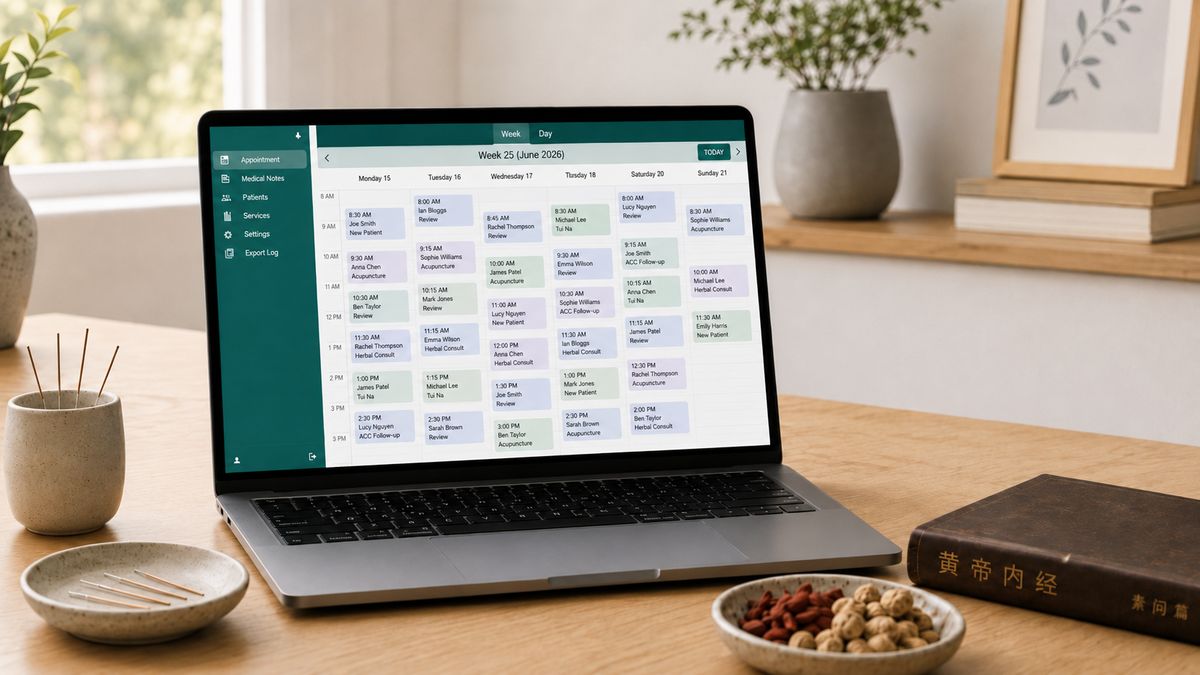
And How XIA Solves These Problems
Generic clinic software has its place in New Zealand healthcare, but not in acupuncture and East Asian medicine clinics.
ACC workflows, structured clinical notes, referrals, herbal prescriptions, and treatment continuity are everyday parts of practice for many acupuncturists and East Asian medicine practitioners in New Zealand. Most clinic software was designed for broader allied health settings (physiotherapy, osteopathy, chiropractic, and podiatry clinics) whose workflows are structured completely differently.
When software is not fit for purpose, practitioners adapt themselves to the software. This is time consuming and inefficient. Clinical notes often require extensive editing before they are suitable for referrals, ACC communication, or ongoing patient management.
Generic Systems Create Friction
Most clinic systems can:
- book appointments
- store notes
- send reminders
- process invoices
Technically, they work. But in day-to-day clinic practice, small amounts of friction start appearing everywhere:
- rewriting notes for ACC
- searching through free text
- trying to remember what needs to be documented
- exporting notes that do not format properly
- recording herbs in systems not designed for herbal medicine
- duplicating information across different workflows
None of these things are major problems on their own. But repeated every day, they create unnecessary admin load and mental fatigue.
ACC Changes the Way Clinics Need to Document
In New Zealand, ACC is not just an optional add-on feature.
It directly affects how many practitioners:
- structure notes
- track progress
- justify treatment
- communicate with other providers
ACC expects clinical records to clearly show:
- the injury and how it occurred
- that treatment is necessary and appropriate
- clinical progress over time
But most clinic software was never built around those expectations. So practitioners often rely on:
- generic templates
- large free-text notes
- personal workarounds
Which usually means rewriting information later when notes need to be reused for:
- ACC communication
- referrals
- clinical review
- treatment extension requests
The Real Problem Is Not Clinical Knowledge
Acupuncturists and East Asian medicine practitioners think, and process patient information in a specific order, to develop a clear diagnosis and treatment plan.
The challenge is capturing that thinking clearly and consistently in a format that can actually be reused later.
There is a big difference between notes that make sense during the appointment, and notes that still make sense:
- two months later
- to another provider
- during an ACC review
Good documentation is not about writing more. It is about making your thinking visible and usable.
Why XIA Was Built
XIA was developed from inside clinical practice, with a focus on the workflows many acupuncture and East Asian medicine clinics in New Zealand deal with every day.
The goal was not to create:
- the most feature-heavy system
- rigid templates
- software that tries to replace clinical judgement
The goal was simpler. Reduce friction in everyday clinic practice.
That meant building around:
- ACC-based workflows
- structured clinical notes
- exportable documentation
- practical treatment recording
- real clinic processes
Instead of forcing practitioners into systems originally designed for completely different professions.
Structure Matters, But It Is Not Magic
No system can replace good clinical thinking.
Clear documentation still depends on:
- assessment
- reasoning
- communication
- professional judgement
But structure matters. Because when notes are structured properly, it becomes much easier to:
- document consistently
- reduce rewriting
- track progress
- communicate clearly with other providers
- reuse notes when needed
XIA does not try to automate clinical thinking. It provides a structure that supports how practitioners already work.
Built for Real Acupuncture Clinics
XIA is designed specifically for:
- acupuncturists
- Traditional Chinese Medicine (TCM) practitioners
- Kampo practitioners
- Chinese herbal medicine practitioners
- Japanese acupuncture practitioners
- Korean acupuncture practitioners
- ACC-based practice in New Zealand
The focus is practical:
- reducing unnecessary admin
- improving note usability
- supporting documentation workflows
- making clinic systems feel easier to work with day to day
- supporting practitioners to maintain clear, professional clinical records that align with New Zealand regulatory and ACC documentation expectations
A Better Alternative to Paper Notes and Generic Systems
Many practitioners have simply adapted to inefficient workflows because they assume that is just part of running a clinic. Others continue using paper notes, which can create their own problems:
- inconsistent documentation
- difficulty tracking progress over time
- hard-to-read handwriting
- limited accessibility between devices or locations
- difficulty exporting or securely sharing records when needed
Generic systems and paper records both create friction in different ways.
Existing software was not designed for how acupuncture and East Asian medicine practitioners actually work.
That is why XIA exists.
Take back your time.
Create notes that work for you, your clinic, and your patients.